
An implant is a small post (usually titanium) placed in the jawbone in place of a missing tooth's root. Once it integrates with the bone, a crown, bridge or fixed prosthesis is attached to it.
Implant success depends on planning before any step: bone volume and quality, gum health, general health and habits such as smoking. So the first visit is a consultation and assessment, where we explain the options that suit your case and each step clearly.
In suitable cases we use digital planning and a surgical guide to position the implant precisely before surgery, and we work with several international implant systems, chosen for each case and discussed with you.
Why patients seek this treatment
- One or more missing teeth
- Discomfort with a removable denture
- Wanting a fixed option that does not rely on preparing neighbouring teeth
- A tooth that cannot be saved and needs replacing
What the first assessment involves
- Reviewing your medical history and medications
- Examining the mouth, gums and neighbouring teeth
- A 3D CBCT scan to assess the bone (taken at a specialist radiology centre)
- Discussing alternatives (implant, bridge or denture) and the pros and limits of each
- A written treatment plan with steps and cost after the assessment
1Replacing a single tooth
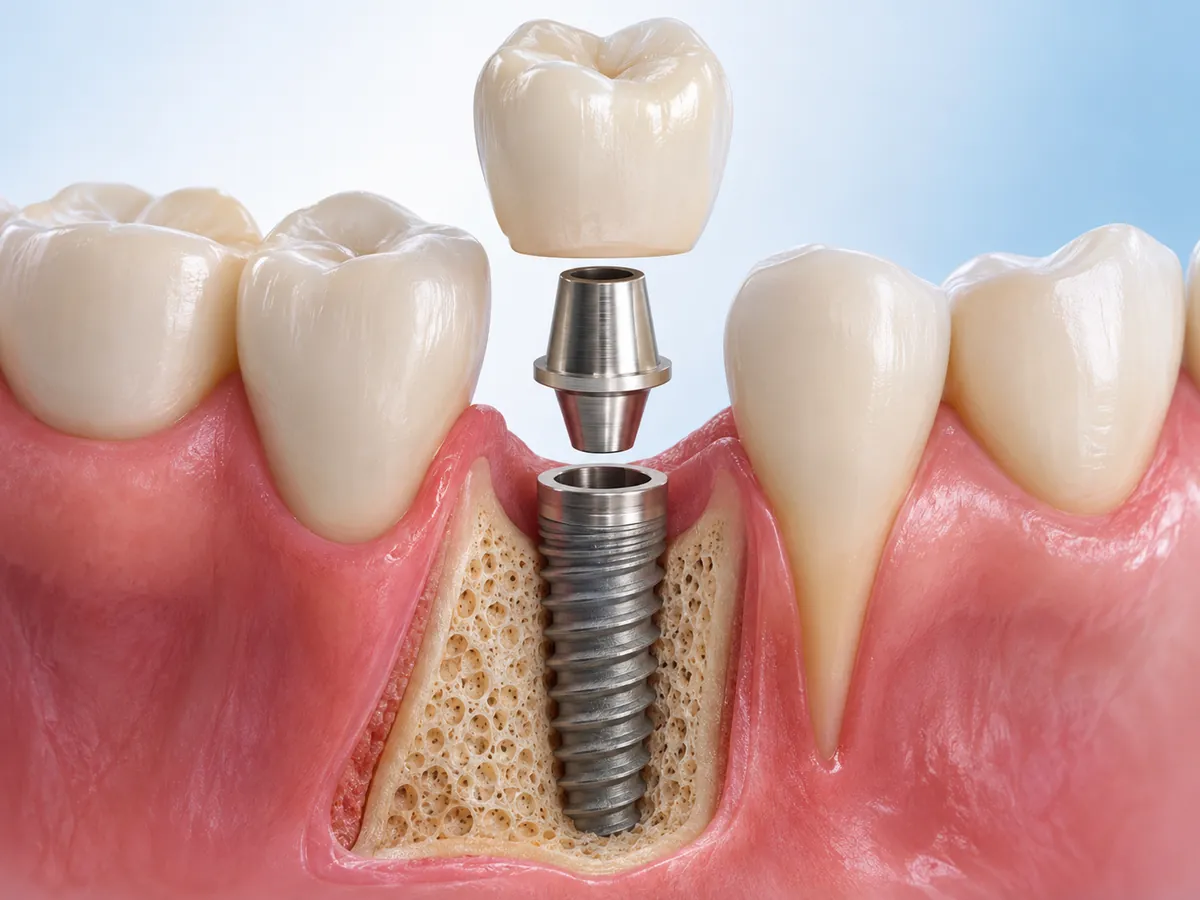
An implant replaces a missing tooth from root to crown without touching the neighbouring teeth. It has three parts:
| Part | What it is | What it does |
|---|---|---|
| Implant | A small titanium post | Placed in the bone where the root was; the bone bonds to it over time |
| Abutment | A small connector | Joins the implant to the crown and sits just above the gum |
| Crown | The visible tooth | Made to match your teeth in shape and shade, in zirconia or porcelain depending on the case |
The steps, in order
- Examination: we check the gum and neighbouring teeth and review your medical history and medicines.
- A 3D CBCT scan: taken at a specialist radiology centre, to see the bone and the position of nerves and sinuses.
- A written plan: we explain the options and expected number of visits, and answer your questions before any step.
- Placing the implant: under local anaesthesia.
- Healing: the bone bonds around the implant; how long this takes varies. In suitable cases a temporary tooth can be fitted early (see immediate implants below).
- The final crown: an impression is taken and the abutment and crown are fitted.
- Follow-up: regular check-ups and daily cleaning, because an implant needs the same care as a natural tooth.
If there is not enough bone, the plan may need an extra stage before or with the implant; this is decided after the examination and X-rays.
2Implant or bridge?
Both are fixed ways to replace a missing tooth. The key difference is that a bridge relies on the neighbouring teeth, while an implant relies on the bone. The final decision is made after the examination.
| Single implant | Traditional bridge | |
|---|---|---|
| Held by | The bone, in place of the root | The two teeth either side of the gap |
| Neighbouring teeth | Left untouched | Reshaped to carry the bridge |
| Time to the final tooth | Usually longer, because of healing time | Usually shorter, in few visits |
| Cleaning | Like a natural tooth, with brush and floss | Needs special floss or an interdental brush under the bridge |
| Follow-up | Regular checks of the gum and bone around the implant | Regular checks of the supporting teeth |
| What affects cost | Implant type, crown material, and any extra stage | Number of units, material, and condition of the supporting teeth |
| Often better when | Neighbouring teeth are healthy and bone and general health allow | Neighbouring teeth already need crowns, or an implant does not suit the case |
Neither is "best" for everyone. After the examination we explain both for your case, and the choice is yours.
3Immediate implants and immediate loading
Two different questions are often mixed up: when is the implant placed? and when is a tooth fitted on it? An implant can be placed immediately with the tooth fitted later, or the other way round.
| Question | Options |
|---|---|
| When the implant is placed | Immediate: at the extraction visit · Early: after the gum heals, weeks later · Delayed: after the bone heals, months later |
| When a tooth is fitted (loading) | Immediate: a temporary tooth within days · Conventional: after healing |
When does an immediate implant suit?
When the tooth can be removed without damaging the surrounding bone, there is enough bone to hold the implant firmly from day one, and there is no active infection at the site.
When is it better to wait?
- If there is active infection or an abscess at the site.
- If the bone wall around the tooth is broken or thin.
- If the implant is not stable enough when placed. Then fitting the tooth is postponed even if immediate loading was planned; this decision is made during the visit, in your interest.
What may be added: sometimes the small space around the implant is filled with bone material, or a healing cap is used instead of a temporary tooth.
After the temporary tooth: it is for appearance and speech, not for biting hard. Keep to soft food on that side until your dentist says otherwise; the final crown is fitted after healing.
4Full-arch implants (All-on-4 and All-on-6)
If a whole jaw has no teeth, or the remaining teeth cannot be saved, a full set of teeth can be fitted on a limited number of implants instead of one implant per tooth.
Fixed or removable?
| Fixed bridge on implants | Removable denture on implants | |
|---|---|---|
| Removed by | The dentist only, at check-ups | You, daily, for cleaning |
| Feel | Closer to natural teeth | Much more stable than a regular denture |
| Cleaning | With a brush and special aids under the bridge | Easier, because it comes out |
| Often better when | Bone and space allow and you can keep up the cleaning | Daily cleaning is hard, or the lips need more support |
How many implants?
All-on-4 carries the jaw on four implants and All-on-6 on six. The number depends on the amount and quality of bone, whether it is the upper or lower jaw, bite force and the type of prosthesis. A removable denture on implants may need fewer. No single number suits every case.
Temporary, then final
- Temporary bridge: in suitable cases it is fitted shortly after surgery, so you are not left without teeth. It is for appearance, speech and soft food.
- Healing: the bone bonds to the implants and the gum settles.
- Final bridge: stronger and more refined; we choose the material with you.
Cleaning and follow-up: daily cleaning under the bridge with the aids we show you, and regular check-ups for examination and professional cleaning. A fixed bridge may need maintenance or part replacement over the years, like any restoration.
5Flapless implants (no gum incision)
It is sometimes called "surgery-free", but more accurately it is minor surgery without cutting or lifting the gum. Instead of opening and stitching the gum, a small round opening the size of the implant is made.
What you may notice: usually no stitches, a shorter visit, and many patients feel more comfortable afterwards. But recovery differs from person to person, and mild pain or swelling can happen as with any implant.
Suitable when
- The bone is wide and tall enough, as shown on the X-rays.
- There is enough firm gum around the site.
- The site does not need an extra bone stage or gum adjustment.
Not suitable when: the bone is thin or needs an extra stage, there is little firm gum, or the dentist needs to see the bone directly for safety. Then conventional placement with the gum opened is the right choice.
Many flapless cases use a surgical guide, because the bone is not seen directly, so precise planning matters.
6Guided implant surgery
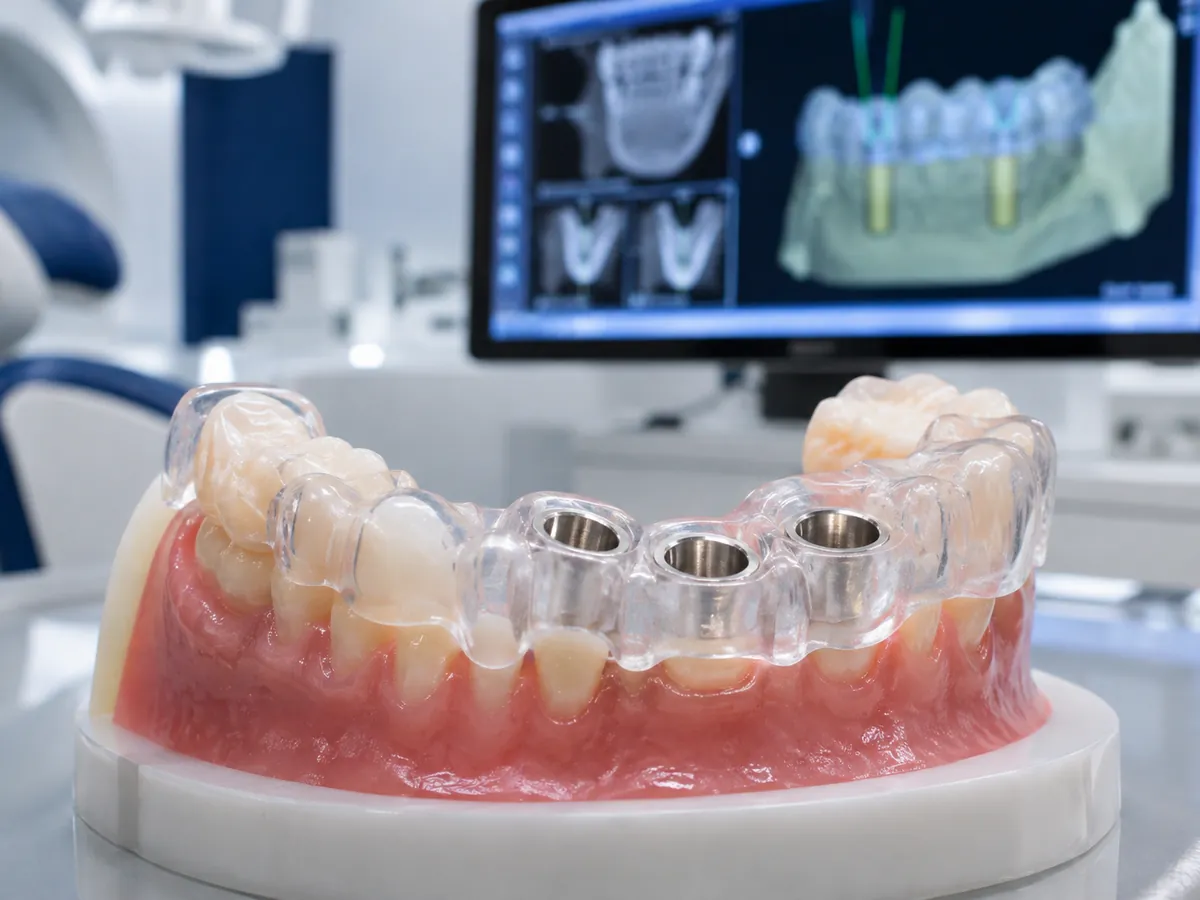
The implant position, angle and depth are planned on the computer first; then a printed guide fits on the teeth or jaw and directs the implant to exactly the planned position.
The planning journey
- Examination: we check the site, gum and bite, and plan the shape of the final tooth.
- A 3D CBCT scan: from a specialist radiology centre, to see the bone, nerves and sinuses.
- Digital scan of your teeth: with the intraoral scanner, usually without impression paste.
- Digital planning: the CBCT and the scan are merged, and the implant is placed where it suits both the bone and the final tooth.
- Designing and printing the guide: a clear template with metal sleeves that set the implant position and angle.
- Surgery day: the guide is seated in your mouth and the implant is placed through it, in suitable cases without a gum incision.
The benefit: more precise implant position, more distance from nerves and sinuses, and a final tooth planned from the start. The guide does not replace the dentist's judgement; it carries out the plan precisely.
Not every case needs it: in straightforward cases conventional placement is entirely appropriate; your dentist will advise after the examination.
Real cases from Tooth Shine
Published with patient consent. Results vary for each case.
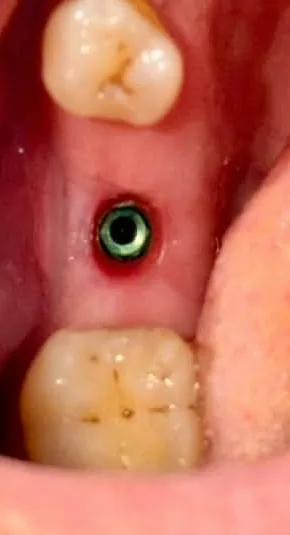 1. Implant
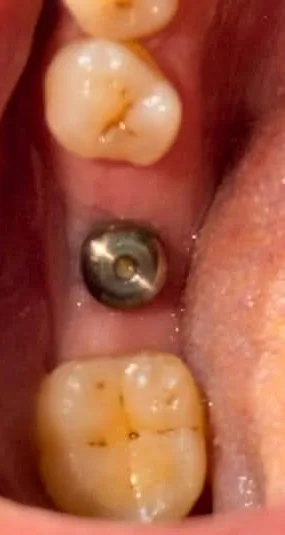 2. Healing
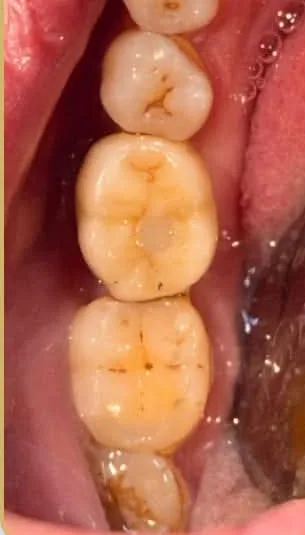 3. Final
Replacing a missing molar with an implant
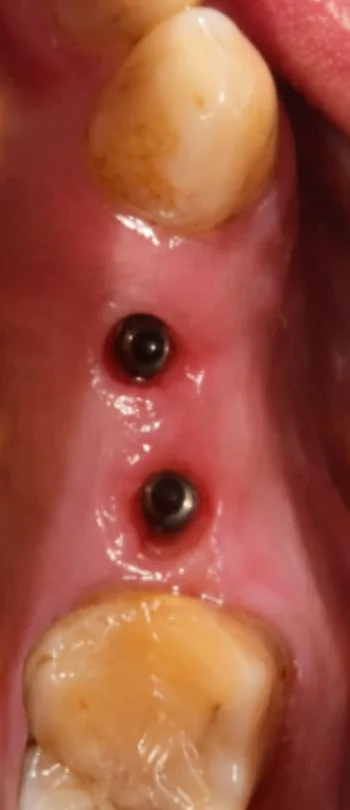 1. Implants
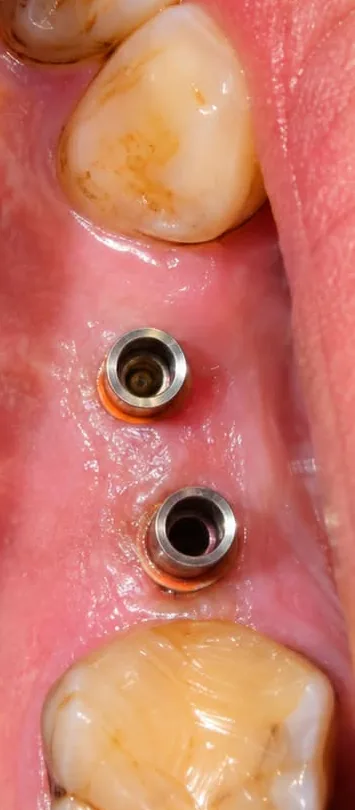 2. Healing
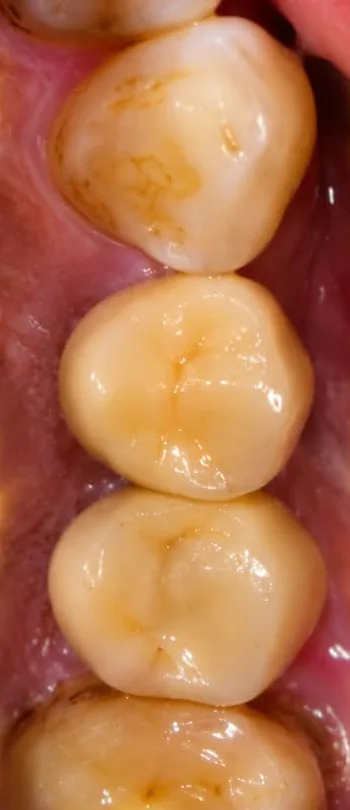 3. Final
Two implants replacing two molars
Technology we use
Implant systems
International implant systems, chosen for your case
We work with several established international implant systems. They differ in design, surface, research history, availability of components and cost, and all are placed with the same planning, sterilisation and follow-up standards.
- StraumannSwitzerland
- MegaGenKorea
- OsstemKorea
- HiossenUSA
- NeobiotechKorea
- FortisGermany
How the system is chosen
- Bone volume, quality and implant position
- The type of restoration planned on the implant
- Your preference and budget once differences are explained
- Long-term availability of components
Costs vary by system and case details, and are set out in your written treatment plan after the consultation.
What patients say on Google
شكرا د بشاي علي الامبلانت مافيش اي الم سهلة جدا الزراعة ممتازة في كل شيء
General reviews of the center (not specific to this service)
بجد دكتور بشاي من احسن دكاتره الاسنان واكتر مركز مريح والبنج الليزر حاجه تحفه ومش مؤلم خالص أنا اكتر حد مش بيستحمل وجع الاسنان بس مع دكتور بشاي بروح من غير خوف علشان بجد كل الاجهزه حديثه ومش بحس بأي الم ♥️♥️
بصراحة، ما شاء الله، الدكتور .. بشاي شاطر جدًا ومتخصص شرح لي حالتي بكل وضوح واهتمام، وطرق العلاج كانت مناسبة جدًا *الدكتور*: متمكن وصبور، *الطاقم الطبي..السكرتارية متعاونين وبشوشين ومحترمين جدا يعملون باحترافية.. أنا كنت بخاف جدا من دكاترة الأسنان بس مركز أسنان شاين علاج نفسي في الأول وطبي ثانيا❤ أنصح بشدة بالتعامل مع الدكتور بيشاي وطاقمه. خدمة ممتازة واهتمام بالمرضى.
المركز ممتاز من حيث التعقيم و دكتور بشاى بصراحة نجح انه يخلينى اتخلص من فوبيا دكتور الأسنان و حقنه البنج ده غير ان ايده ماشاء الله خفيفة جدا و مريح جدا ف التعامل و الابتسامة مش بتفارق وشه سواء و هو بيتعامل مع المريض او مع الاستاف اللى معاه و ده بيدى راحة نفسيه رهيبه
Questions & answers
Is implant placement painful?
Implants are placed under local anaesthesia. Some swelling or mild discomfort for a few days afterwards is common, and the dentist prescribes what helps and explains aftercare.
Can anyone have implants?
Most adults can have implants, but some medical conditions, medications or smoking can affect the outcome or need extra preparation. This is assessed at the consultation.
When is the tooth fitted on the implant?
Usually after the implant has integrated with the bone; in selected cases a temporary tooth can be fitted earlier. The dentist explains the right timing for your case.
Does smoking rule out implants?
Smoking is not an absolute contraindication, but it is a well-known risk factor: it raises the chance of implant failure and inflammation around the implant by affecting healing. Stopping or reducing smoking before and after surgery is advised, and your dentist explains your specific risks.
Does diabetes rule out implants?
People with well-controlled diabetes can usually have implants after assessment. Poorly controlled diabetes increases the risk of slow healing and infection, so your dentist may request a recent test of diabetes control or coordinate with your physician before surgery.
I take osteoporosis medication or blood thinners. Can I have implants?
Tell your dentist about all medications before the consultation. Some osteoporosis drugs (such as bisphosphonates and denosumab) and blood thinners need special assessment and precautions, sometimes with your physician. Never stop a medication on your own.
What if I don't have enough bone?
A 3D CBCT scan shows the available bone. If bone is limited, the plan may need an extra stage or a suitably sized implant, decided after the X-rays. Your dentist explains the best option, its steps and timeline.
Is there an age limit for implants?
Implants are placed once jaw growth is complete. There is no upper age limit as such; general health and bone and gum condition matter more.
How long do implants last, and how do I care for them?
Implants can serve for many years, though this cannot be guaranteed for every case. What matters most: brushing, cleaning between teeth, avoiding smoking, and regular reviews to catch any inflammation around the implant early.
Can I have fixed teeth on implants if I have lost all my teeth?
Often yes: either a fixed prosthesis on several implants, or a removable denture that clips onto implants (overdenture). The choice depends on bone and expectations, and is decided after assessment.
Why are there no implant prices on the website?
Because cost depends on the number of implants, the implant system, any need for bone grafting, and the type of restoration. After the consultation we provide a written plan with costs and explain the differences between available systems.
Medical content reviewed by Dr. Beshay Mina, dentist and founder of Tooth Shine Dental Center. Review date: 13 November 2026. This information is for education and does not replace an examination.
Latest articles
Do smoking or diabetes rule out dental implants?
Smoking and diabetes are among the most common questions before implants. Short answer: usually not absolute barriers, but risk factors that must be assessed and managed first.
Read articleWhat happens if a missing tooth is not replaced?
Losing one tooth can seem minor, but over time it may affect neighbouring teeth, bone and chewing. Here is why timely replacement matters.
Read articleThis page offers general information and does not replace an examination. The right treatment is decided after assessing each case.